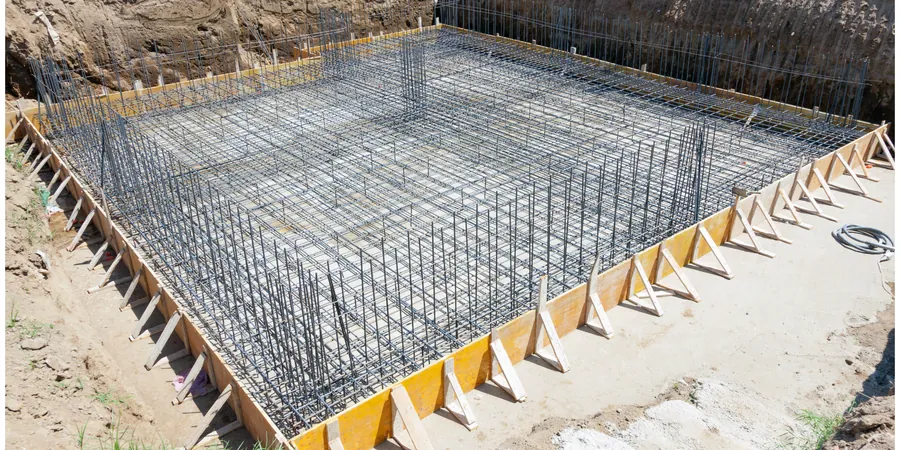
Minneapolis sits on a complex glacial legacy where the Mississippi River carved through layers of till, outwash, and ancient lake sediments. Designing a raft or mat foundation here means contending with frost penetration reaching 60 inches below grade and the notorious Lake Agassiz clays that swell and shrink with seasonal moisture changes. In our experience, a properly engineered mat foundation distributes structural loads across these variable soils, reducing differential settlement in a way that isolated footings simply cannot match. The city’s freeze-thaw cycles, which can heave shallow elements by over an inch, make the monolithic rigidity of a raft foundation a practical necessity for long-term performance. Before finalizing geometry, we often correlate soil bearing data with a CPT test to verify stratigraphy where access allows, ensuring the mat’s bearing surface sits below the active frost zone on competent material.
A well-designed mat foundation in Minneapolis turns the region’s variable glacial soils into a uniform bearing platform, managing frost heave and differential settlement in a single monolithic element.