GEOTECHNICAL ENGINEERING
MINNEAPOLIS
HomeUnderground ExcavationsGeotechnical design of deep excavations

Geotechnical Design of Deep Excavations in Minneapolis

Evidence-based design. Reliable delivery.

LEARN MORE

In Minneapolis, excavation projects hit a very specific challenge: the transition from loose alluvial and outwash sands into the dense, overconsolidated Des Moines Lobe till. We see this boundary surprise contractors every season, especially near the Mississippi River corridor where the drift thickness can exceed 150 feet. A deep excavation design here isn't a generic shoring plan—it's a tailored response to layered deposits that change stiffness abruptly. Our lab team supports the design phase with high-quality strength parameters from undisturbed Shelby tube samples and in-situ data, feeding directly into finite-element models. Before starting the structural analysis, many projects benefit from a site investigation with CPT to refine the stratigraphic profile without disturbing sensitive silts. We couple that data with index testing to confirm the till's preconsolidation pressure, a critical input when you're excavating 30 feet or more below street level in the Warehouse District or near the U of M campus.

A deep excavation in Minneapolis glacial till isn't governed by one soil parameter—it's the contrast between strata that drives the design load cases.
Our service areas

Methodology and scope

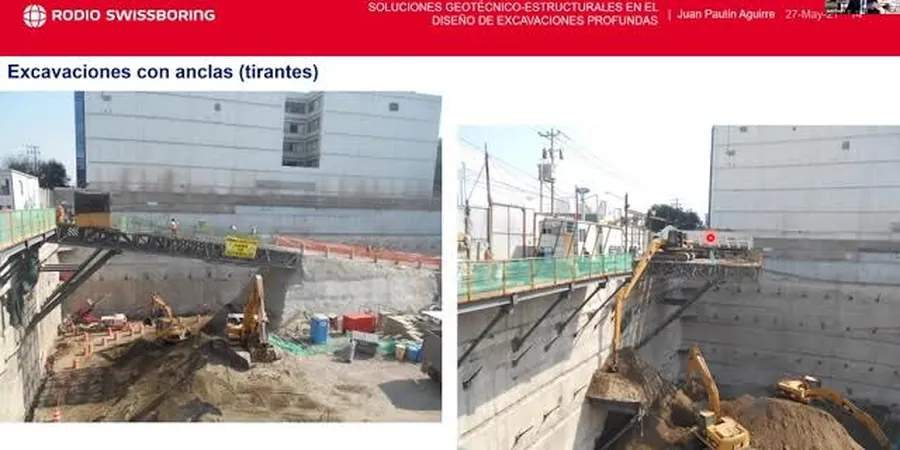
The freeze-thaw cycles that define Minneapolis winters introduce another variable into deep excavation behavior—the active layer in the upper 5 to 7 feet can lose suction rapidly during spring melt, reducing apparent cohesion in clay-rich tills. That seasonal shift demands a design that accounts for two very different soil states. Our approach integrates drained and undrained parameters from advanced triaxial testing to bracket the strength envelope, so the shoring system performs in August humidity and in March thaw conditions alike. Key elements we address include: basal heave stability in excavations that bottom in normally consolidated lake sediments; lateral squeeze potential where soft clays underlie stiff crusts; the groundwater control strategy, often requiring deep wells in the St. Peter Sandstone aquifer; soldier pile and lagging deflection limits when adjacent to century-old masonry buildings; and construction sequencing that respects the city's strict vibration monitoring requirements near light rail infrastructure.
Geotechnical Design of Deep Excavations in Minneapolis
Technical reference — Minneapolis

Local considerations

The most common mistake we observe on Minneapolis excavation sites is treating the entire soil column as drained for short-term construction stages. In the low-permeability till matrix, excess pore pressures from excavation unloading can persist for weeks—and if the shoring design uses drained friction angles without accounting for that transient undrained state, wall movements exceed predictions. Another frequent issue: underestimating the radius of influence of dewatering in the region's interconnected sand lenses, which can trigger settlement damage to nearby structures founded on shallow footings. We've seen cases where a dewatering system pulled fines from a lens at 40-foot depth, causing a slow settlement that cracked a building's facade two blocks away. The city's building official review increasingly requires a building adjacent settlement analysis with pre-construction condition surveys and real-time inclinometer data, particularly within the Downtown zoning overlay where excavation support systems fall under Chapter 33 of the IBC.

Need a geotechnical assessment?

Reply within 24h.

Email: contact@geotechnicalengineering1.org

Applicable standards

AASHTO LRFD Bridge Design Specifications (10th Ed., 2023) – Section 3: Loads, Section 11: Abutments & Walls, ASCE 7-22 Minimum Design Loads – Chapter 15: Earth Retaining Structures, FHWA-NHI-10-024/025 – Soil Nail Walls & anchored systems, ASTM D2487-17e1 – Classification of Soils for Engineering Purposes (USCS), IBC 2024 – Chapter 33: Safeguards During Construction

Technical parameters

ParameterTypical value
Maximum excavation depth analyzedUp to 65 ft below grade
Soil stratigraphy units modeledTypically 4–7 distinct layers
Groundwater control methodsDeep wells, vacuum-assisted, wellpoints
Shoring system types designedSoldier pile & lagging, secant piles, slurry walls
Lateral wall deflection limit (urban)0.15%–0.25% of excavation depth
Base stability factor of safety (undrained)FS ≥ 1.5 per AASHTO LRFD
Design groundwater levelMississippi River flood stage + seasonal bias
Seismic coefficient for shoring (Minneapolis)kh = 0.06–0.10 per ASCE 7-22 site class D/E

Frequently asked questions

What is the typical cost for a geotechnical deep excavation design package in Minneapolis?

For a project in Minneapolis, the engineering fee for a deep excavation design package typically ranges from US$2.230 to US$7.910, depending on excavation depth, shoring complexity, and number of adjacent structures requiring impact assessment. A 20-foot excavation with a straightforward soldier pile wall on a single lot falls toward the lower end, while a 50-foot cut with secant piles, extensive dewatering, and multiple buildings within the influence zone reaches the upper range.

How does the Des Moines Lobe till affect deep excavation design versus other soil types?

The Des Moines Lobe till present across Minneapolis is overconsolidated and fissured, which means its drained strength is high but its mass permeability can be deceptively low. During excavation, negative pore pressures develop and dissipate slowly, so we must analyze both short-term undrained conditions—where strength is controlled by the preconsolidation stress—and long-term drained conditions. This dual analysis is different from designing in clean sands where drained behavior governs from day one.

What level of wall deflection is considered acceptable for protecting adjacent buildings?

In Minneapolis, we generally target lateral wall deflections below 0.15% to 0.25% of the excavation depth when adjacent to masonry buildings or utilities. For a 30-foot excavation, that translates to roughly 0.5 to 0.9 inches of movement. The specific limit depends on the condition and foundation type of the neighboring structure, established through a condition survey and structural tolerance review before we finalize the shoring stiffness and bracing spacing.

Does the Mississippi River level influence deep excavation design downtown?

Yes, significantly. The river stage fluctuates seasonally and during flood events, and the groundwater table in the downtown Minneapolis area communicates with the river through sand and gravel lenses. Our design groundwater level accounts for the 100-year flood elevation plus a safety margin. In excavations near the river, we often include a cutoff wall or extend the shoring into low-permeability till to manage hydraulic gradients and prevent piping at the base of the excavation.

Location and service area

We serve projects across Minneapolis and its metropolitan area.

View larger map