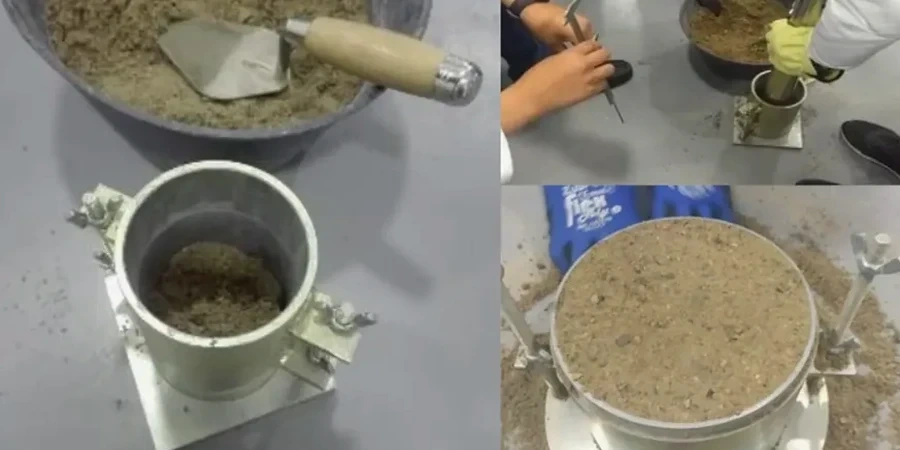
In-situ testing forms the backbone of geotechnical site characterization in Minneapolis, where subsurface conditions can vary dramatically across the Twin Cities metropolitan area. This category encompasses all field-based testing methods that evaluate soil, rock, and groundwater properties without removing samples from their natural state. For engineers and contractors working in Minneapolis, in-situ tests provide real-time data on density, strength, permeability, and deformation characteristics that laboratory tests alone cannot replicate. The value of these methods lies in their ability to capture the effects of natural structure, stress history, and moisture conditions that are inevitably disturbed during sampling and transport.
Minneapolis sits atop a complex glacial legacy that demands rigorous field investigation. The city's subsurface is dominated by deposits from multiple advances of the Laurentide Ice Sheet, leaving behind a sequence of tills, outwash sands, lacustrine clays, and discontinuous lenses of compressible organic soils. The Mississippi River valley cuts through these deposits, creating bluffs and terraces with challenging slope stability issues. In the downtown area, engineers frequently encounter the St. Peter Sandstone and Platteville Limestone at relatively shallow depths, but overlying soils can include loose alluvium and soft post-glacial sediments. These conditions make in-situ testing indispensable for foundation design, as the behavior of glacial tills can vary from dense and overconsolidated to loose and collapsible within short horizontal distances.
Regulatory compliance in Minneapolis follows Minnesota State Building Code requirements, which reference the International Building Code (IBC) and ASCE standards for geotechnical investigations. The Minnesota Department of Transportation (MnDOT) also provides detailed specifications for earthwork and foundation testing on public projects. ASTM International standards govern most in-situ test methods used locally, including field density test (sand cone method) procedures per ASTM D1556, which remain the reference standard for compaction verification on commercial and residential sites. Standard penetration testing follows ASTM D1586, while cone penetration testing is performed under ASTM D5778. These standards ensure that data collected across different sites and by different firms maintains consistency and legal defensibility.
The range of projects requiring in-situ testing in Minneapolis spans from single-family home foundations in expanding suburbs like Maple Grove and Blaine to large-scale infrastructure in the North Loop and along the I-394 corridor. High-rise developments in downtown Minneapolis demand detailed shear wave velocity profiling for seismic site classification, while brownfield redevelopments in the Mill District often require permeability testing to design environmental containment systems. Roadway and bridge projects rely heavily on field density test (sand cone method) results to verify compaction of granular base materials and structural backfill. Flood protection works along the Mississippi River and Minnehaha Creek also depend on in-situ strength testing to ensure levee stability under saturated conditions. Each project type presents unique challenges that field testing must address, from the presence of buried organic channels to the variable depth to bedrock across the metro area.
In-situ testing evaluates soil properties in place without removing samples, preserving natural structure, stress conditions, and moisture content. Laboratory testing requires extracted samples that inevitably experience disturbance during sampling, transport, and preparation. In Minneapolis glacial soils, in-situ methods like cone penetration testing often provide more reliable strength and compressibility data because sensitive lacustrine clays and loose outwash sands are particularly susceptible to sample disturbance.
The Minnesota State Building Code, following IBC Chapter 18, requires geotechnical investigations including in-situ testing for all structures except detached one- and two-family dwellings on sites where hazardous conditions are not suspected. Commercial, multi-family, and institutional projects in Minneapolis must demonstrate adequate subsurface characterization through field testing. MnDOT specifications mandate in-situ density testing for all structural backfill and pavement subgrade preparation on public works projects.
Minneapolis soil conditions, shaped by glacial activity, include dense tills, soft lacustrine clays, loose alluvial sands, and organic deposits. Cone penetration testing excels in profiling these layered sequences continuously. Standard penetration testing works well in granular tills but may disturb sensitive clays. In-situ density tests using the sand cone method are essential for compaction verification in the variable fill materials and outwash sands common across the metro area.
Geotechnical engineering firms performing in-situ testing in Minnesota should employ licensed Professional Engineers per Minnesota Board of AELSLAGID requirements. Field technicians conducting tests like nuclear density gauge operations must hold MnDOT certification. For standard penetration testing and cone penetration testing, operators should demonstrate competence per ASTM standards. Firms should also carry professional liability insurance and maintain calibrated equipment with documentation traceable to NIST standards.