Minneapolis sits atop a complex glacial landscape where the Mississippi River has carved through layers of Ordovician dolomite and sandstone, overlain by dense till and outwash deposits that vary drastically within a single city block. The city's location on the western edge of the stable North American craton does not eliminate seismic risk; the 1867 earthquake near Morris, Minnesota, reached an estimated magnitude of 4.7 and rattled foundations across the Twin Cities. For structural engineers working in Minneapolis, the primary concern is not just distant New Madrid seismicity but the amplification of low-frequency waves within the deep sedimentary basin of the Upper Mississippi Valley. A site-specific seismic microzonation study quantifies how the 100 to 200 feet of unconsolidated glacial material in neighborhoods like Downtown or Northeast will modify ground motion, directly influencing the design response spectrum per ASCE 7-22.
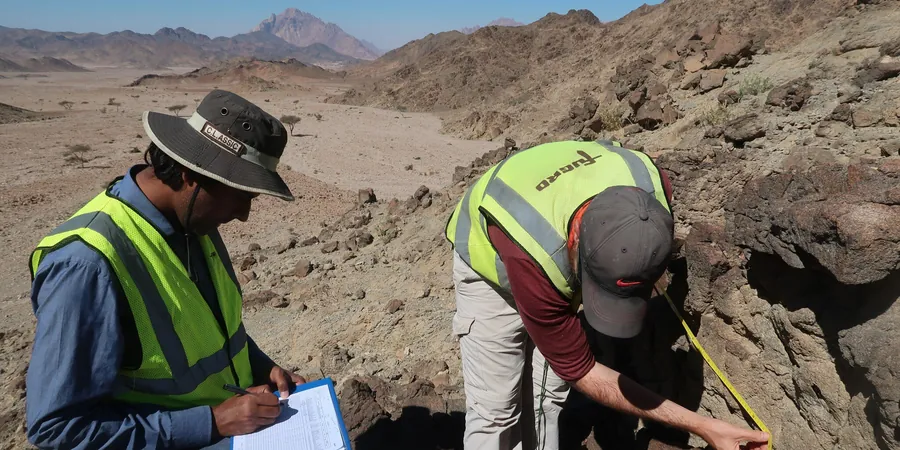
When foundation rock lies at variable depth across the metro, a uniform site class assumption can miss critical resonance effects. Our methodology starts with MASW surveys to measure shear wave velocity profiles, then cross-references the VS30 values with CPT soundings to refine the stratigraphic boundary between Lake Agassiz clays and the underlying till.
A 40% difference in spectral acceleration between Site Class C and E can separate a code-compliant structure from one requiring a full seismic retrofit in Minneapolis.