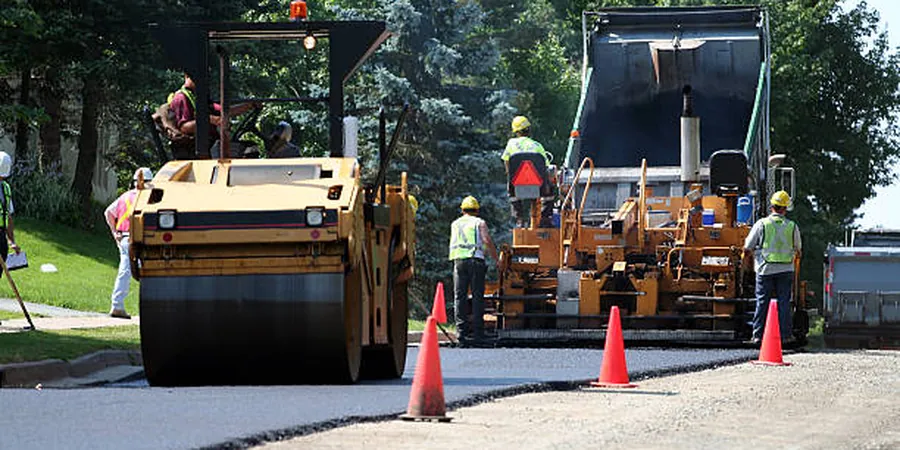
The structural design of flexible pavements in Minneapolis must account for a pavement system's entire response to the region's annual freeze-thaw cycling. AASHTO 1993 design methodology remains the backbone of county and municipal standards across Hennepin County, requiring a clear definition of the effective roadbed resilient modulus (MR) to predict serviceability loss over the design period. In Minneapolis, the depth of frost penetration commonly exceeds 90 inches, which forces the structural section to incorporate a substantial non-frost-susceptible aggregate base course to combat differential heave. The geotechnical investigation preceding the pavement design therefore becomes as critical as the structural number calculation itself. When the subgrade consists of the fine-grained glacial till typical of the Twin Cities basin, the resilient modulus can degrade severely under saturated spring-thaw conditions. Before finalizing the asphalt layer coefficients, the engineering team typically integrates in-situ permeability measurements to calibrate drainage coefficients, ensuring that the base course will not trap free water between the surface and the frozen subgrade during March breakup.
A flexible pavement in Minneapolis is not a single layer of asphalt; it is a layered elastic system where the subgrade's spring-thaw modulus governs the fatigue life of the entire section.