GEOTECHNICAL ENGINEERING
MINNEAPOLIS
HomeSlopes & WallsRetaining wall design

Retaining Wall Design & Geotechnical Engineering in Minneapolis

Evidence-based design. Reliable delivery.

LEARN MORE

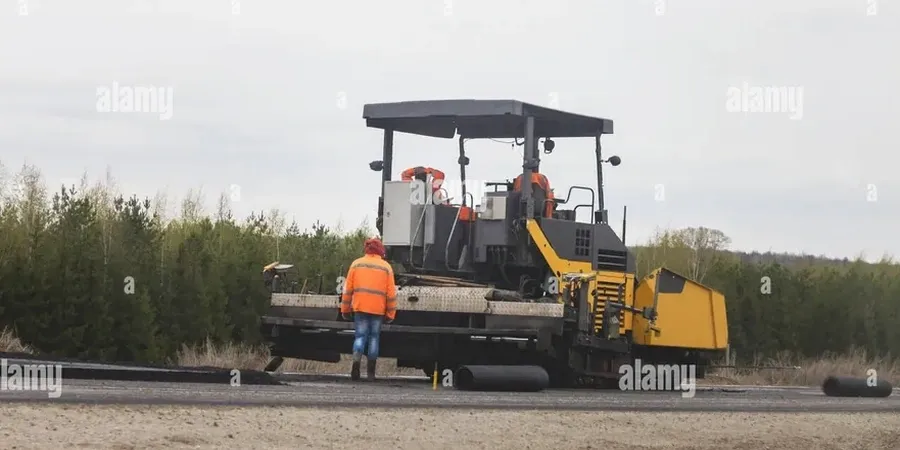
A crawler drill rig sets up on a tight Minneapolis lot, coring through glacial till to reach competent limestone. That is where retaining wall design starts — not with software, but with the ground itself. Minneapolis sits on a complex stack of Quaternary deposits left by the Mississippi River and ancestral Lake Agassiz. We see everything from dense till to soft alluvial silts within the same block. Our team runs SPT borings and test pits to map these transitions before sizing the stem, heel, and toe. For taller walls in the Downtown Loop, we correlate blow counts with undrained shear strength to nail the bearing pressure. The city reviews submittals against the Minnesota State Building Code, which adopts IBC 2020 with local amendments. Permafrost is not an issue here, but frost depth reaches 60 inches in open terrain — we extend the footing base below that line on every design.

In Minneapolis, a retaining wall fails from water before it fails from earth — drainage design is not an accessory, it is the primary defense.
Our service areas

Methodology and scope

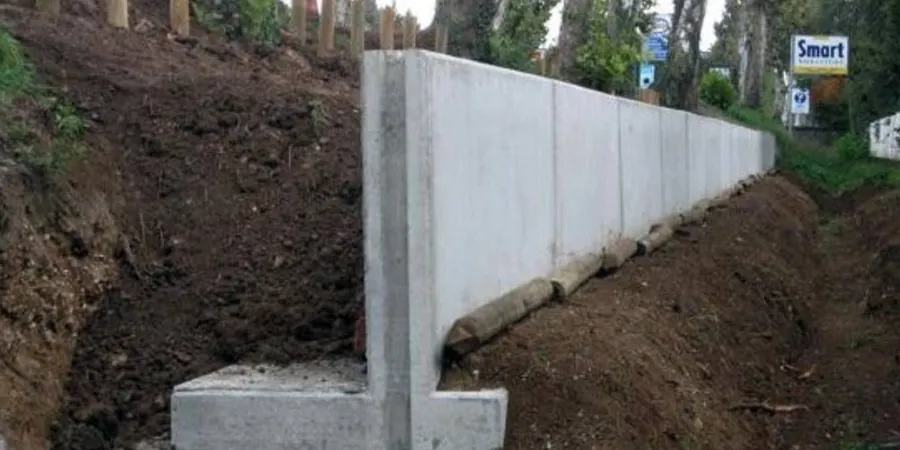
In Minneapolis, many times we find that the upper five feet of soil are riddled with organics and old fill from the milling era along the riverfront. You cannot found a cantilever wall on that material and expect it to stay plumb through a hard freeze. We specify undercut and engineered granular backfill, compacted to 95% of modified Proctor density. The backfill drain is mandatory. Without a clean aggregate chimney and a perforated toe drain, hydrostatic pressure builds behind the wall during spring thaw, pushing the stem outward. We design cast-in-place counterfort walls for grade separations near I-35W, and modular block walls for residential lots in Linden Hills. Each design follows ASCE 7-22 for lateral earth pressure, with at-rest conditions assumed unless the wall can tolerate enough rotation to mobilize active pressure. We check global stability with Spencer's method when the retained slope exceeds 2H:1V, and we verify sliding and overturning factors per Section 1806 of the IBC.
Retaining Wall Design & Geotechnical Engineering in Minneapolis
Technical reference — Minneapolis

Local considerations

Minneapolis sits at roughly 830 feet above sea level, with the Mississippi River cutting a deep valley through the center of the metro. That topography creates natural retaining wall risk: slopes that were stable for decades can begin to creep after a record-wet October. We have investigated walls where the footing was placed on stiff clay but the global slip surface daylighted in a softer layer ten feet below. The 2014 flood event in Northeast Minneapolis pushed groundwater to levels not seen in the geotechnical reports written during the dry 1990s. Walls that lacked a functioning underdrain failed within one season. Our approach is to model the phreatic surface at the ground level for any wall retaining a slope steeper than 3H:1V during the wet cycle. We also check for expansive clay in the Decorah Shale weathered zone — swelling pressures can add unexpected lateral load against basement walls in the Uptown area. Service life drops fast when these local nuances are overlooked.

Need a geotechnical assessment?

Reply within 24h.

Email: contact@geotechnicalengineering1.org

Applicable standards

IBC 2020 (adopted by Minnesota State Building Code), ASCE 7-22 Minimum Design Loads, MnDOT Standard Specifications for Construction 2024, ASTM D1586 Standard Test Method for SPT, ASTM D2487 Classification of Soils (USCS)

Technical parameters

ParameterTypical value
Design life (cantilever/counterfort)50 years minimum
Frost depth (MnDOT / IBC)60 in below finish grade
Backfill compaction (modified Proctor)95% density
Factor of safety — sliding≥ 1.5 (static)
Factor of safety — overturning≥ 2.0 (static)
Drainage aggregate gradationASTM No. 57 stone
Seismic design category (typical)A (ASCE 7-22)
Lateral earth pressure modelAt-rest (Ko) or active (Ka)

Frequently asked questions

What does retaining wall design cost for a typical Minneapolis residential lot?

For a single-family residential lot in Minneapolis, the design fee typically falls between US$1,010 and US$3,830, depending on wall height, retained slope complexity, and whether subsurface exploration already exists. A site visit, one test pit or boring, and the signed calculation package are included in this range.

Which building code governs retaining wall design in Minneapolis?

The City of Minneapolis enforces the Minnesota State Building Code, which adopts IBC 2020 with state-specific amendments. Chapter 18 governs retaining wall design, and we reference ASCE 7-22 for lateral earth pressure and seismic load combinations.

How deep must a retaining wall footing be in Minneapolis to avoid frost heave?

The standard frost depth requirement in Minneapolis is 60 inches below finished grade, per MnDOT and IBC guidance for open sites. We extend the footing bottom to that elevation or deeper, and we specify non-frost-susceptible backfill to cut off capillary rise.

Do you handle the Minneapolis permit submittal and structural peer review?

Yes. We prepare the full submittal package: geotechnical report, structural calculations, and stamped drawings. We also respond to city plan reviewer comments and attend one round of revisions within the fixed fee.

Location and service area

We serve projects across Minneapolis and its metropolitan area.

View larger map