GEOTECHNICAL ENGINEERING
MINNEAPOLIS
HomeRoadwayRigid pavement design

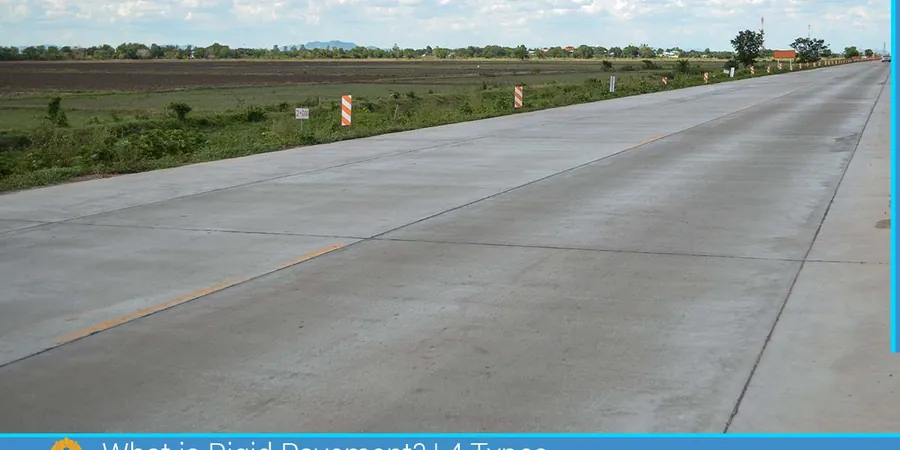
Rigid Pavement Design in Minneapolis: Concrete That Handles Freeze-Thaw and Fat Clay

Evidence-based design. Reliable delivery.

LEARN MORE

The soils beneath Minneapolis don't forgive shortcuts. We're talking about lean clays and silty deposits left by glacial Lake Agassiz and the Mississippi's ancestral channels, sitting on a ~60-inch frost line that turns every pavement joint into a potential failure point. When the thermometer swings from -30°F in January to 95°F in July, curling stresses in a concrete slab can exceed what the structural design predicted on paper. That's why our rigid pavement design process starts with the subgrade CBR and the actual grain-size distribution, not with a default k-value from a textbook. Minneapolis demands that you know exactly what's under the slab before you even specify the dowel bar diameter.

A concrete slab on a Minneapolis fat clay with 60 inches of frost penetration doesn't fail from traffic alone — it fails from differential heave and joint pumping.
Our service areas

Methodology and scope

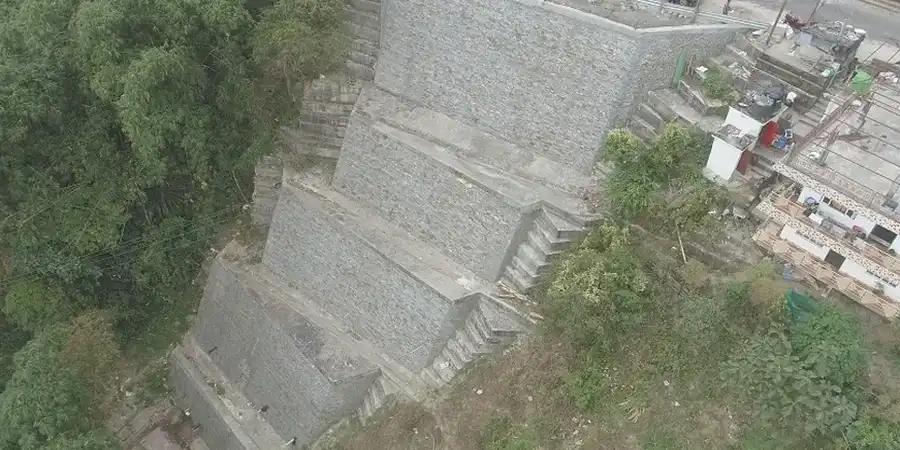
The build-out of the Interstate system in the 1960s, particularly I-35W and I-94, exposed a lot of the subgrade challenges that still define pavement engineering here: variable moisture in the upper 4 feet, isolated pockets of organic silt, and a water table that rises sharply in spring. We approach rigid pavement design by tying the structural model directly to site-specific geotechnical data. Joint spacing, load transfer efficiency, and base type all hinge on whether we're dealing with a well-drained granular subbase or a moisture-sensitive fat clay. For projects near the river bluffs or in the North Loop, we often integrate slope stability analysis to ensure the pavement edge isn't compromised by lateral movement, and we use test pit observations to calibrate the soil profile before running the AASHTO 1993 fatigue equations.
Rigid Pavement Design in Minneapolis: Concrete That Handles Freeze-Thaw and Fat Clay
Technical reference — Minneapolis

Local considerations

We've pulled cores on parking lots in Bloomington and industrial yards in Northeast where the concrete thickness was on spec, but the slab had curled 3/8 of an inch at the corners because the contractor ignored the moisture condition of the subgrade during the pour. In Minneapolis, the biggest risk isn't the 18-kip ESAL — it's water trapped in the base layer, freezing and expanding, creating voids under the slab that you won't see until the first heavy truck hits in April. If the in-situ permeability of the subgrade is below 0.5 ft/day, positive drainage becomes non-negotiable. We specify edge drains and daylighted base layers on almost every project north of I-394, and we never approve a design that assumes zero frost heave without a geotechnical report to back it up.

Need a geotechnical assessment?

Reply within 24h.

Email: contact@geotechnicalengineering1.org

Applicable standards

AASHTO Guide for Design of Pavement Structures (1993, with 1998 supplement), MnDOT Pavement Design Manual (current edition), ASTM C78 / C39 (flexural and compressive strength of concrete), ACPA Design of Concrete Pavements for City Streets, ASTM D2487 (Unified Soil Classification System)

Technical parameters

ParameterTypical value
Design methodAASHTO 1993 Guide for Design of Pavement Structures / PCA method
Typical slab thickness (local roads)6.0 – 7.5 in
Typical slab thickness (arterials/I-94 corridor)8.0 – 10.5 in
Modulus of subgrade reaction (k-value)100 – 250 pci (adjusted for frost effects)
Joint spacing (JPCP)12 – 15 ft
Base type4-6 in dense-graded aggregate base (MnDOT Class 5 or 6)
Load transfer efficiency target> 75% (dowel bars per ACPA guidelines)
Freeze-thaw durabilityAir content 5-7%, ASTM C260-compliant AEA

Frequently asked questions

What joint spacing does MnDOT recommend for plain concrete pavements in Minneapolis?

MnDOT typically specifies 15-foot joint spacing for JPCP with dowel bars on arterials, and 12 feet for city streets without dowels. The exact spacing depends on slab thickness, concrete flexural strength, and the coefficient of thermal expansion of the local aggregate. We verify these parameters before finalizing the joint layout.

How does the frost depth affect rigid pavement design here?

Minneapolis has a design frost depth of 60 inches. If the subgrade is frost-susceptible silt or lean clay, we either remove and replace it below that depth or install a thick granular base to cut the capillary rise. The k-value used in design is reduced to account for the weakened subgrade during the spring thaw period, per AASHTO 1993 recommendations.

What is the typical cost range for rigid pavement design services in Minneapolis?

Design-only fees for a rigid pavement project in Minneapolis typically range from US$1,960 to US$6,100, depending on the length, number of lanes, and whether subgrade investigation and laboratory testing are included. A full package with field CBR, soil classification, and jointing plan falls toward the upper end of that range.

Do you use the PCA method or AASHTO for concrete pavement thickness?

We use both. The AASHTO 1993 method is the contractual standard for most municipal and MnDOT work, but we cross-check fatigue consumption and erosion criteria using the PCA method (PCA EB109P). This dual approach catches edge cases — like industrial yards with heavy static loads — that the AASHTO empirical model doesn't handle well.

Can you design pervious concrete pavements for stormwater management in Minneapolis?

Yes, but with important caveats. Pervious concrete in Minneapolis must be underlain by a substantial stone reservoir layer and an underdrain system, because the subgrade often has very low permeability. We design the section to store the water quality volume and drain it slowly, while ensuring the reservoir doesn't freeze solid and heave the slab. Freeze-thaw durability of the pervious mix itself is critical and requires careful void structure control.

Location and service area

We serve projects across Minneapolis and its metropolitan area.

View larger map