GEOTECHNICAL ENGINEERING
MINNEAPOLIS
HomeIn-Situ TestingField permeability test (Lefranc/Lugeon)

Field Permeability Testing in Minneapolis (Lefranc & Lugeon Methods)

Evidence-based design. Reliable delivery.

LEARN MORE

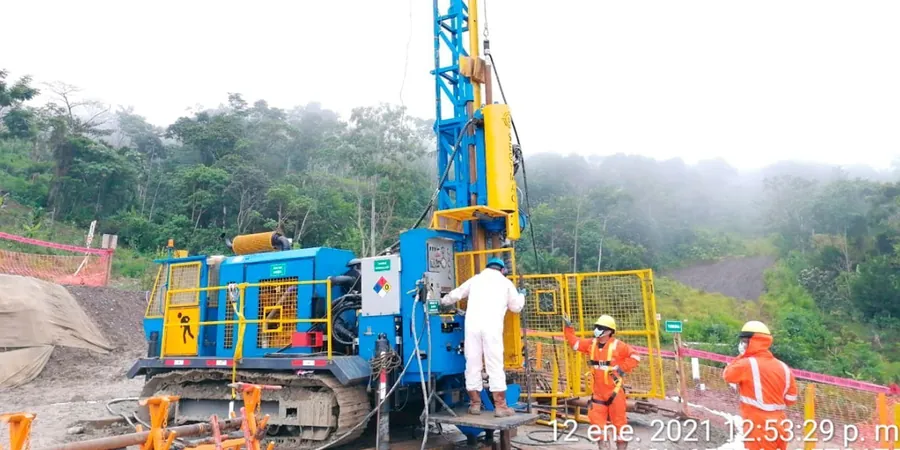
Minneapolis sits on a complex layering of glacial outwash, lake sediments, and weathered bedrock that makes groundwater behavior anything but predictable. We have measured hydraulic conductivity values varying by three orders of magnitude within a single city block near the Mississippi River corridor. That kind of variability is why a desktop estimate from grain-size correlations rarely captures what is actually happening below grade. Before finalizing a dewatering plan or basement drainage system, we run in-situ in-situ permeability assessments using the Lefranc method in soil and the Lugeon method in rock. These tests give us direct, formation-specific flow data that laboratory remolded samples simply cannot reproduce, and they integrate naturally with spt-drilling programs when the rig is already on site.

A single Lugeon test in fractured Platteville limestone tells you more about real seepage paths than a dozen lab permeability specimens.
Our service areas

Methodology and scope

ASTM D6391 governs our field permeability procedures, and we adapt the test configuration to Minneapolis subsurface conditions on a project-by-project basis. The Lefranc test uses a constant or falling head in a cased borehole interval, measuring flow into the surrounding soil over a known length of open screen. In the St. Peter Sandstone or Platteville limestone that underlies much of downtown, we switch to the Lugeon protocol: clean water is injected under controlled pressure in five-step cycles, and the resulting Lugeon unit is calculated from the pressure-flow curve. This approach distinguishes laminar flow from dilation or wash-out behavior, which matters enormously when designing cutoff walls or rock-socketed shafts below the water table. The data feeds directly into groundwater models and helps us avoid the over-conservatism that drives up construction costs in Minneapolis tight urban sites.
Field Permeability Testing in Minneapolis (Lefranc & Lugeon Methods)
Technical reference — Minneapolis

Local considerations

Minneapolis has an average annual precipitation around 30 inches, and the water table across Hennepin County can rise to within three feet of the surface during spring melt and after heavy rain. Failure to quantify in-situ permeability often leads to undersized dewatering systems that cannot keep up with actual inflow, or to basement slabs that float because uplift pressures were underestimated. In the Loring Park and North Loop neighborhoods, we have encountered artesian conditions in buried sandstone channels that only became apparent during Lugeon testing. Saturated sandy till layers overlying low-permeability clay can create perched water that surprises excavation contractors. A well-executed field permeability program removes that uncertainty and gives the structural and waterproofing designers hard numbers for their groundwater models.

Need a geotechnical assessment?

Reply within 24h.

Email: contact@geotechnicalengineering1.org

Applicable standards

ASTM D6391-11 (2020) – Standard Test Method for Field Measurement of Hydraulic Conductivity Using Borehole Infiltration, ASTM D2487 – Unified Soil Classification System (for describing test intervals), ASCE 7-22 – Minimum Design Loads (groundwater load provisions)

Technical parameters

ParameterTypical value
Applicable standardASTM D6391-11 (reapproved 2020)
Soil test methodLefranc constant/falling head in borehole
Rock test methodLugeon five-pressure-step injection
Pressure stages (Lugeon)Typically 5, up to 10 bar in deep rock
Test interval length0.3 m to 3.0 m depending on stratigraphy
Measurement resolution10^-7 to 10^-3 m/s (soil), 0.1 to 100 Lugeon units (rock)
Required borehole diameterMinimum NX (76 mm) for tool access and packer seal
Reporting outputHydraulic conductivity (k in cm/s) and Lugeon value (Lu)

Frequently asked questions

How deep can you run a Lugeon test in Minneapolis bedrock?

We routinely test to depths of 100 feet in the Platteville and St. Peter formations beneath downtown Minneapolis. The limiting factor is typically the drilling method, not the test equipment. For deeper investigations—such as tunnel feasibility studies—we have performed Lugeon tests in NQ and HQ core holes exceeding 200 feet, using wireline packer assemblies that allow multiple intervals to be tested in a single trip down the hole.

What is the difference between a Lefranc test and a lab permeability test?

A lab permeability test on a Shelby tube sample measures the hydraulic conductivity of a small, disturbed or remolded specimen—typically a few inches in diameter. A Lefranc test measures flow into the undisturbed formation over a screened interval of one to several feet, capturing the influence of soil fabric, fissures, sand lenses, and gravel seams that are absent from a small lab sample. In layered glacial soils common to Minneapolis, the field value is frequently two to ten times higher than the lab result, and it is the number that should govern dewatering design.

How much does a field permeability test cost in the Twin Cities?

For a single Lefranc or Lugeon test interval integrated with an existing drilling program, costs typically range from US$590 to US$1,160 per test, depending on depth, number of pressure stages, and whether single or double packer configuration is required. Mobilization and drilling are priced separately. We provide a fixed-price proposal once we review the boring logs and your project specifications.

How long does it take to get test results?

A single Lefranc test in soil usually takes 30 to 60 minutes of field time once the borehole interval is prepared. A five-stage Lugeon test in rock requires roughly 60 to 90 minutes per interval. We transmit preliminary hydraulic conductivity values within 24 hours of test completion so your design team can move forward without waiting for the full geotechnical data report, which follows in five to seven business days.

Location and service area

We serve projects across Minneapolis and its metropolitan area.

View larger map