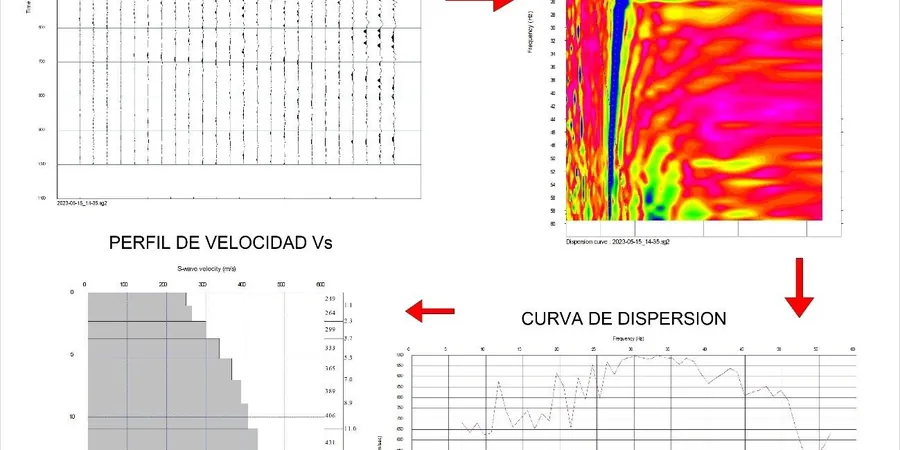
We ran a MASW survey last winter off West River Parkway where a developer wanted six stories on ground that had everyone nervous. The geotechnical report called it outwash sand, but the shear wave velocity profile told a different story below 18 meters: a stiff glacial till that saved the project from deep foundations. Minneapolis sits on a complex stack of Quaternary deposits—till, lake sediments, alluvium—and the seismic microzonation work done after the 2011–2012 earthquake sequence showed just how much VS30 varies block by block. Our lab runs active and passive MASW with 24-channel arrays, processing dispersion curves against the city's known stratigraphy so the Vs profile ties back to what the drill rig actually found.
VS30 is not a layer average; it is a travel-time-weighted parameter. A soft lens at 8 meters can shift the site class more than bedrock at 25.